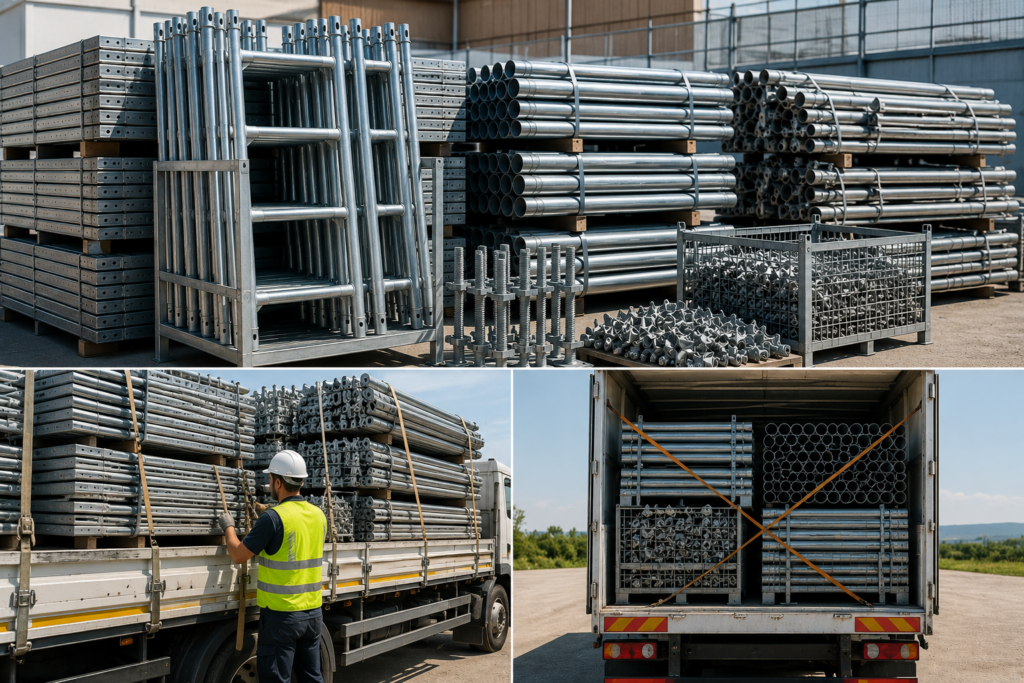

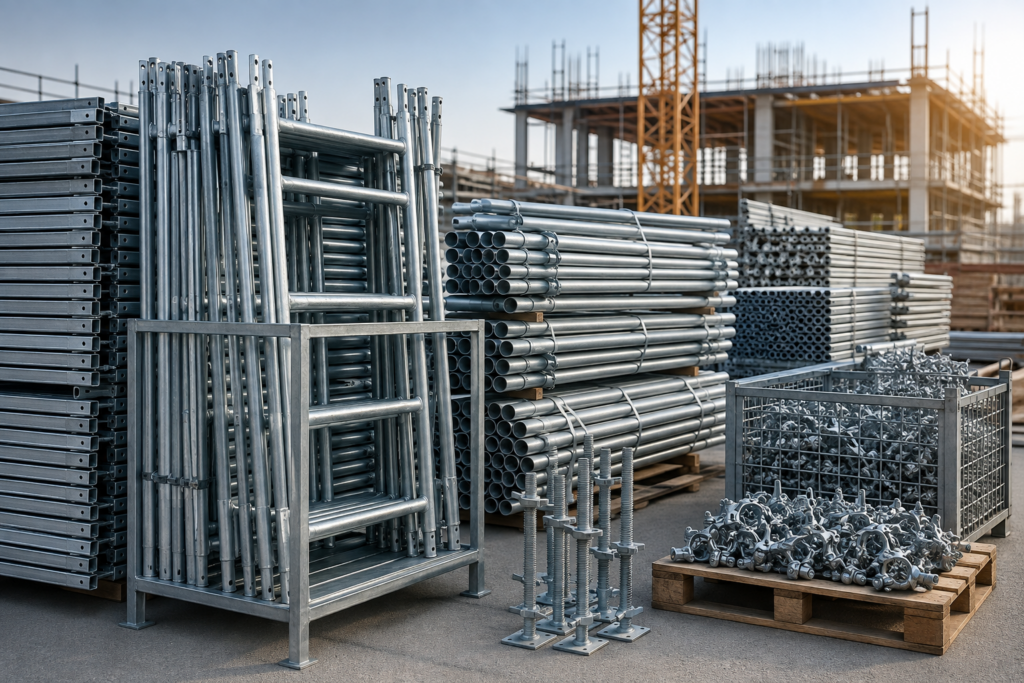
Proper scaffold storage and stacking are essential for maintaining the safety, durability, and usability of scaffolding systems. For professional construction companies, contractors, and site managers, knowing how to stack scaffolding correctly helps prevent material damage, workplace hazards, and unnecessary equipment losses.
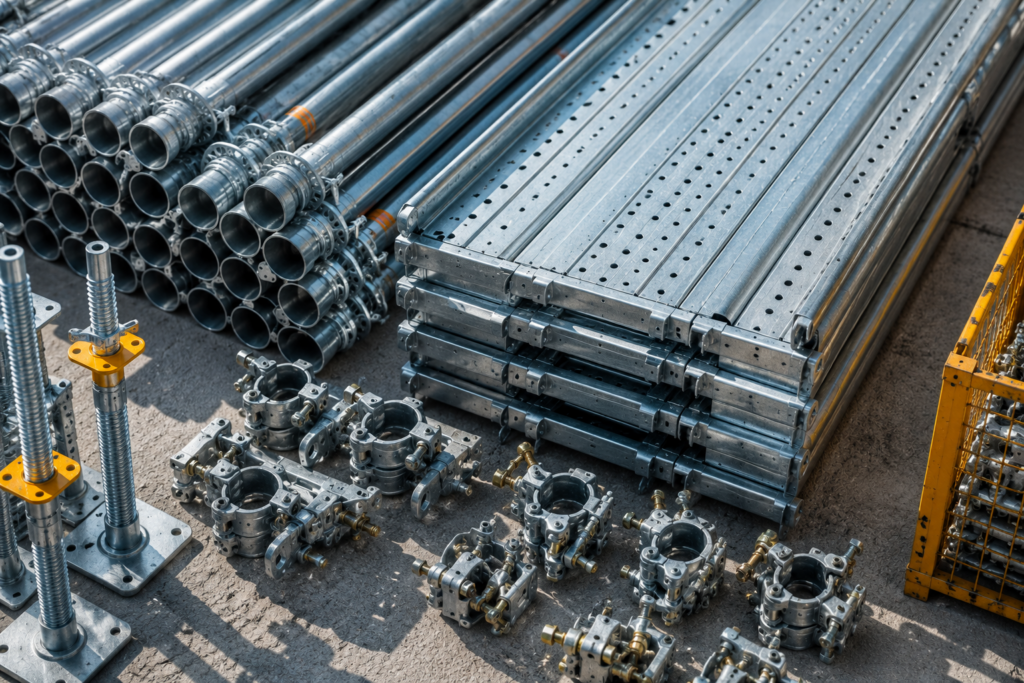
At Boztepe, scaffolding systems are designed for professional construction applications, and safe handling of scaffold components is an important part of efficient site management. H-type scaffold systems consist of components such as H frames, horizontal braces, diagonal braces, steel platforms, starting feet, adjustable base jacks, ledgers, couplers, and other connection elements.
Why Is Proper Scaffold Stacking Important?
Scaffold components should be stored in an organized and controlled area before and after installation. Improper stacking can cause components to fall, become damaged, or create obstacles around the construction site. Damaged scaffold materials should not be used during installation. Boztepe’s scaffold safety instructions specifically state that scaffold materials such as frames, braces, and steel platforms must not be defective or damaged.
A suitable storage area should be stable, level, and protected from conditions that could cause materials to move or collapse. Components should be arranged according to their type and size so that workers can easily identify and access the required parts.
How Should Scaffolding Be Stacked?
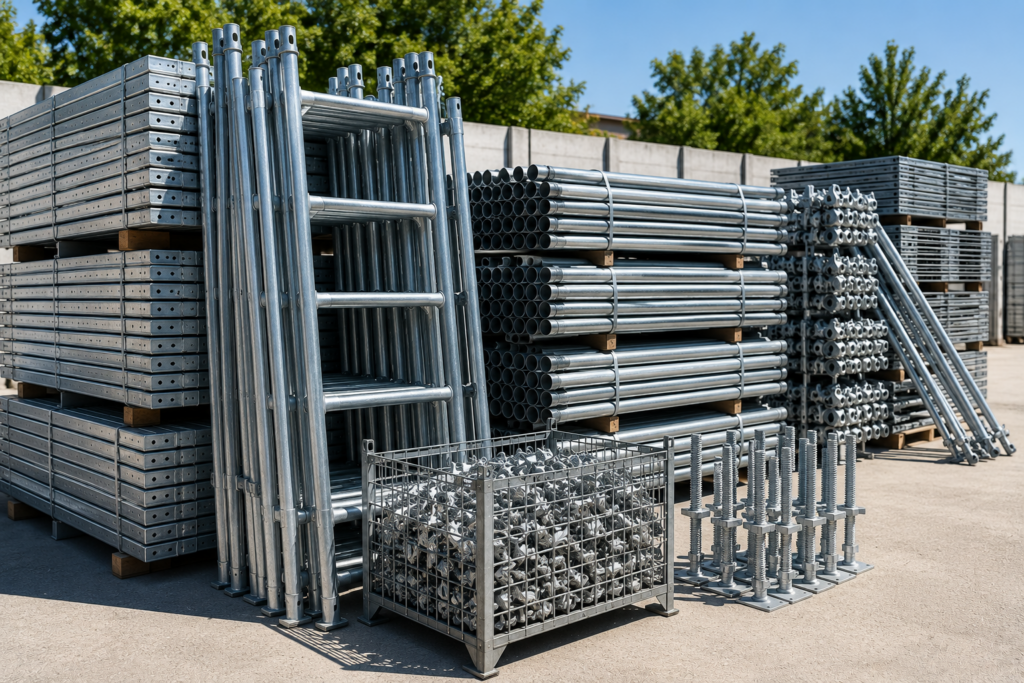
First, separate the scaffold components according to their type and dimensions. H frames, steel platforms, horizontal braces, diagonal braces, ledgers, couplers, and other components should be stored separately whenever practical. Boztepe’s safety instructions also emphasize separating scaffold assembly and disassembly personnel and components according to their types and sizes.
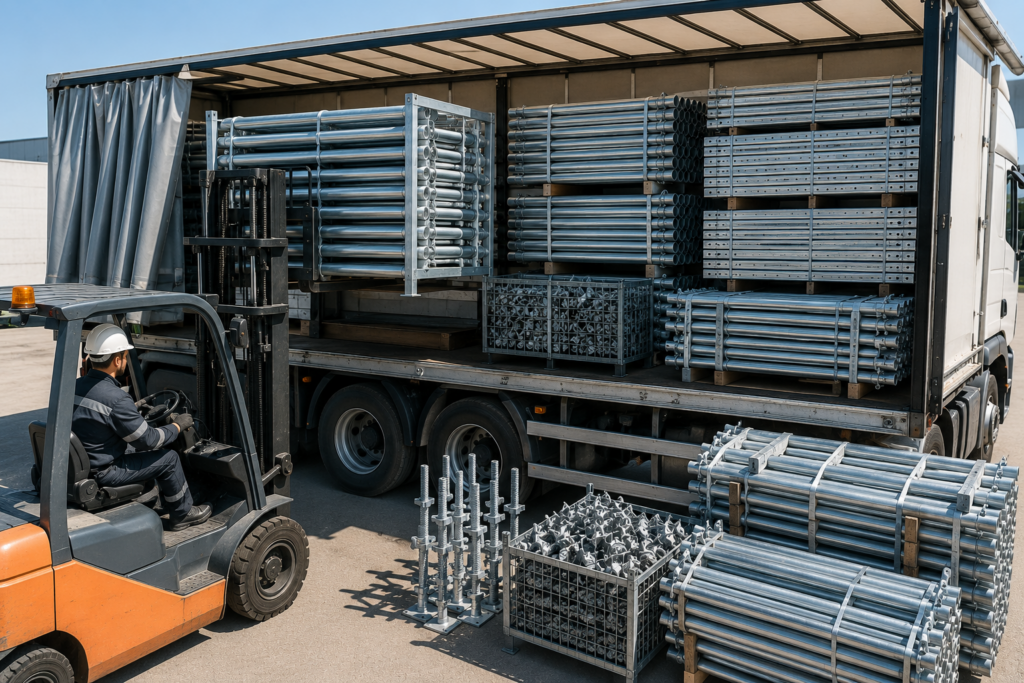
Place heavier components at the bottom and lighter components above them. Avoid creating unstable or excessively high piles. Components should be positioned so that they cannot roll, slide, or fall into pedestrian or working areas.
Steel platforms and frames should be stored on suitable supports rather than directly on unstable ground. Small components such as couplers and connection accessories can be kept in designated containers to prevent loss and simplify inventory control.
Safe Handling During Scaffold Dismantling
Scaffold materials must never be thrown from height during dismantling. According to Boztepe’s safety instructions, dismantled materials must be lowered safely by securing them appropriately and then placed in a suitable storage location.
After dismantling, components should be inspected for deformation, cracks, corrosion, missing parts, or other visible damage before being returned to storage. Materials that do not meet the required condition should be separated from usable components.
Boztepe Scaffolding for Professional Construction Projects
Boztepe H-type safety scaffolding is designed as a professional scaffold system with components manufactured for construction applications. The system has a load class 4 capacity according to EN 12810 and EN 12811 standards, with a uniformly distributed working-area load capacity of 300 kg/m² as described in the technical manual.
Correct scaffold stacking and storage, together with proper installation, inspection, and dismantling procedures, contributes to a safer and more organized construction site.
When storing Boztepe scaffolding, always follow the applicable project requirements, site safety procedures, and the manufacturer’s technical instructions. Proper organization protects scaffold components, improves handling efficiency, and helps ensure that the equipment is ready for its next construction project.