
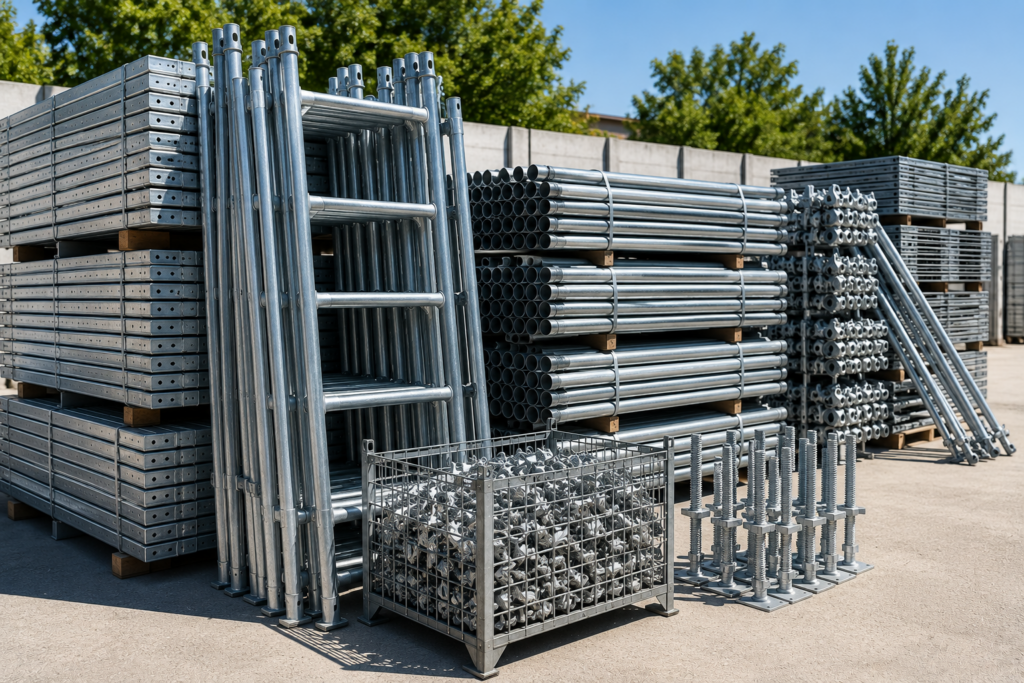
Proper facade scaffolding stacking is an important part of construction site organization, equipment protection, and workplace safety. Scaffolding components should not be placed randomly after dismantling. Frames, platforms, braces, guardrails, base jacks, wall ties, couplers, and other components should be separated according to their type and dimensions, inspected, and stored in suitable areas.
For professional scaffolding systems such as those supplied by Boztepe Grup İskele, correct storage and stacking practices help protect the equipment from damage while making the next installation process faster and more efficient.
What Should Be Considered When Stacking Facade Scaffolding?
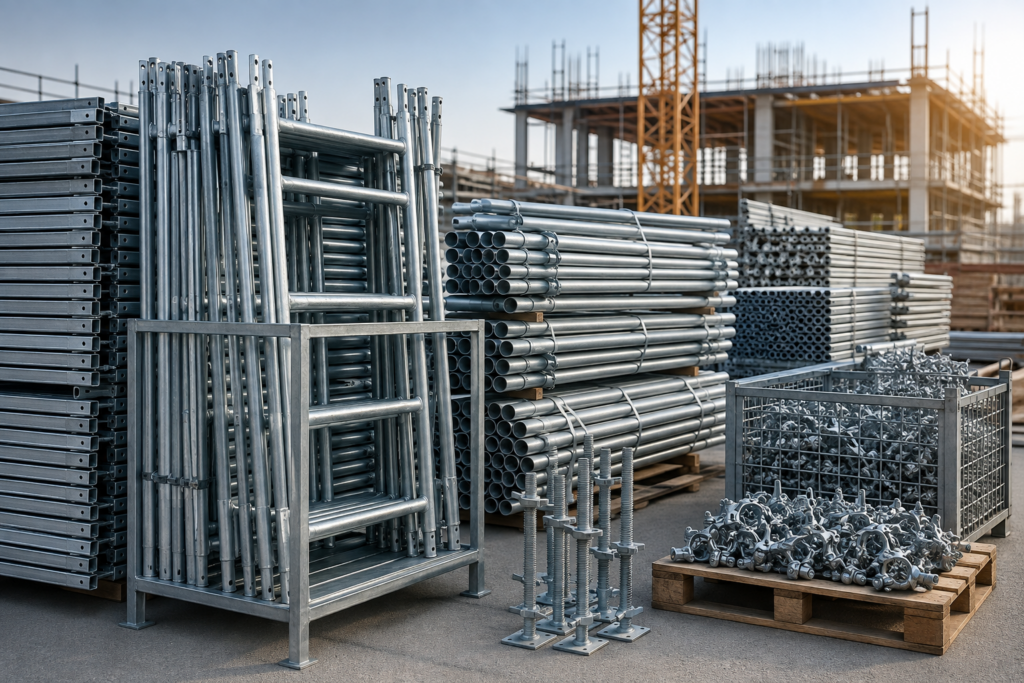
Before stacking, all facade scaffolding components should be inspected. Damaged, deformed, excessively worn, or unusable components should be separated from serviceable materials. Components should not be mixed together because this can make inspection, transportation, and future scaffold installation more difficult.
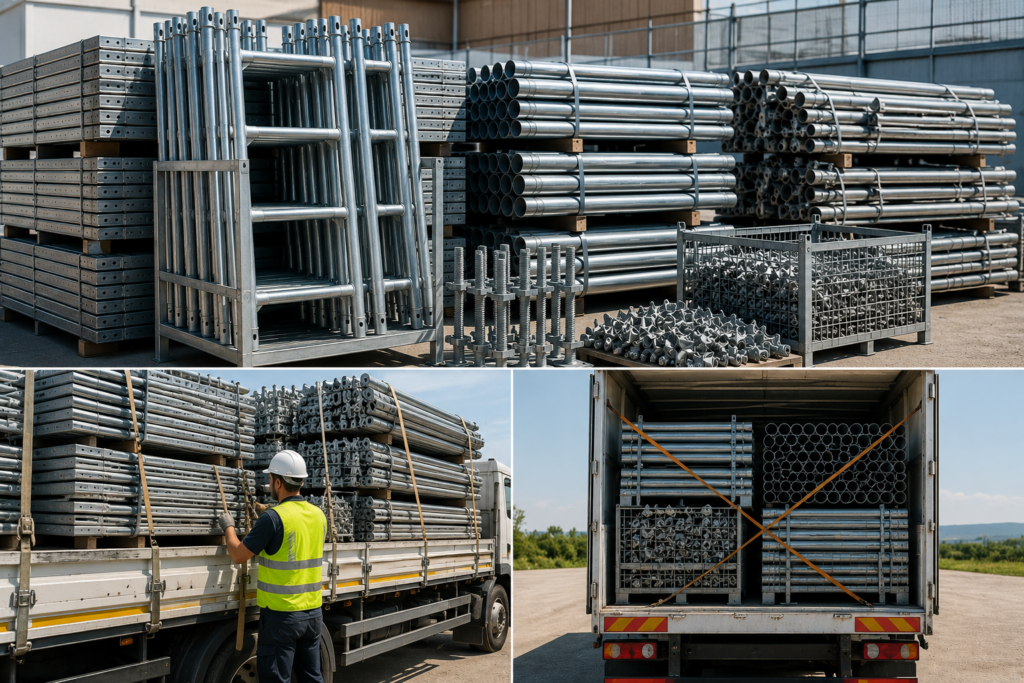
Scaffolding frames should preferably be stacked vertically or placed in suitable storage racks that prevent them from falling or tipping over. Horizontal components such as platforms, guardrails, and braces should be arranged in stable piles. The height of each pile should be determined according to the dimensions, weight, stability, and handling method of the materials.
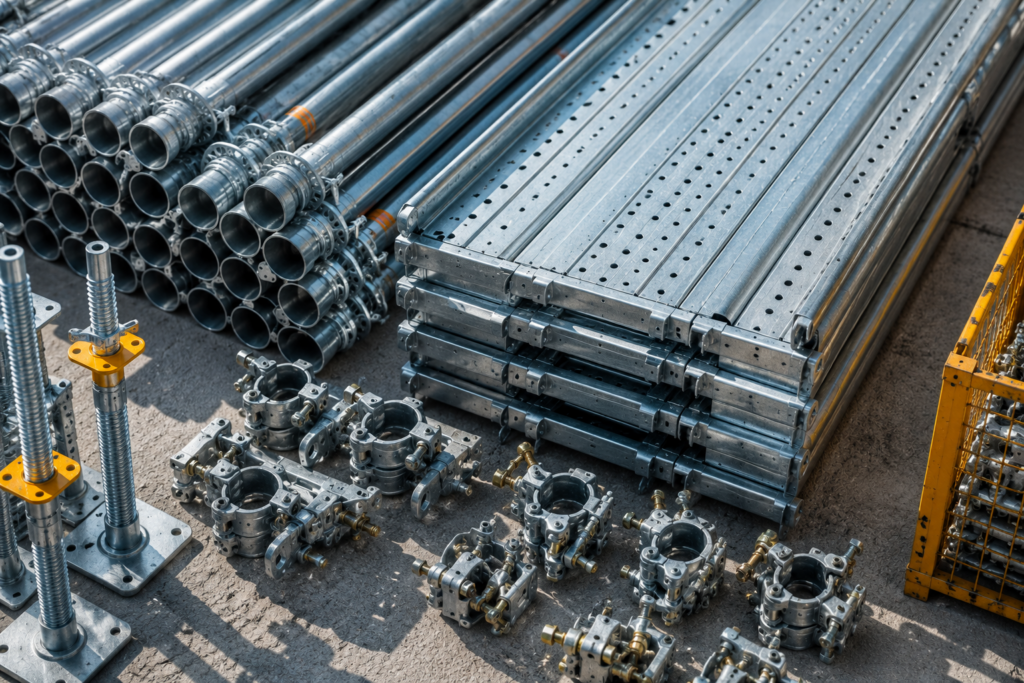
Small components such as scaffold couplers, base jacks, wall ties, and connection accessories should be stored in dedicated boxes, baskets, or containers. This prevents small parts from becoming lost and allows workers to locate the required components quickly.
The storage surface is also important. Scaffolding materials should be placed on a firm, level, and stable surface. Materials should not be stored where they can be exposed to standing water, mud, excessive impact, or conditions that could accelerate corrosion.
Safe Storage After Scaffold Dismantling
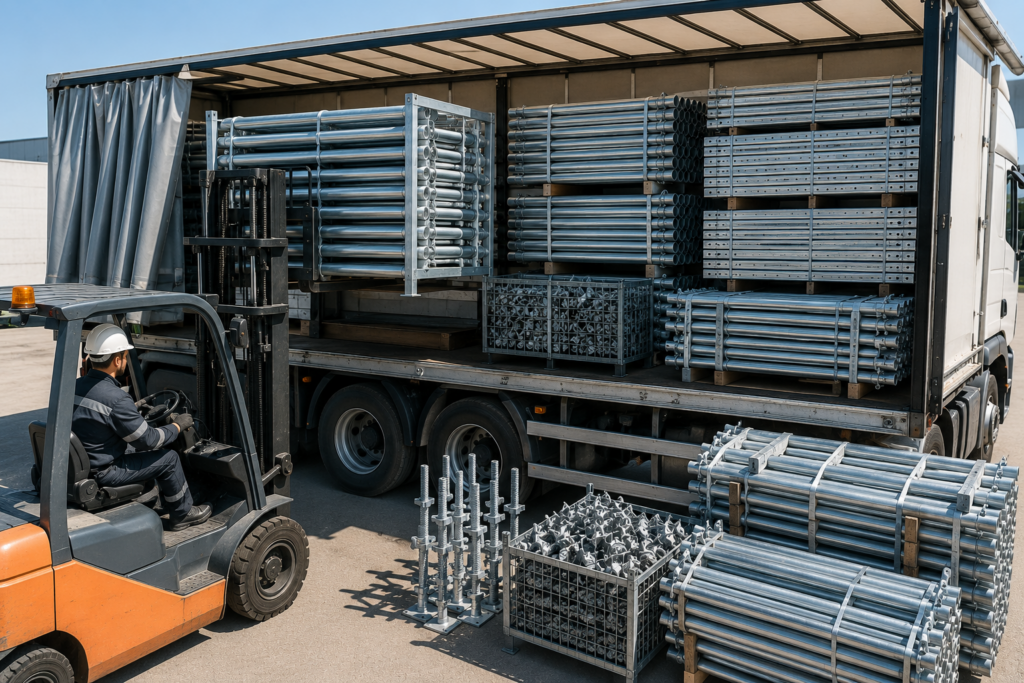
After facade scaffold dismantling, materials should be lowered safely rather than thrown from height. Components should then be sorted according to their type and dimensions. According to the organization principles used in professional scaffold systems, keeping components properly separated makes inspection and subsequent assembly considerably easier.
Access routes around the storage area should remain clear. Stacked materials should not block emergency exits, pedestrian routes, fire equipment, or vehicle access.
For long-term storage, galvanized steel scaffolding components should also be protected against unnecessary exposure to moisture and contamination. Regular inspection helps identify corrosion, deformation, damaged connections, or other problems before the components are used again.
Boztepe Facade Scaffolding Solutions
Boztepe Grup İskele provides professional scaffolding solutions designed for construction and facade applications. Correct scaffold stacking, storage, inspection, assembly, and dismantling are essential for maintaining the performance and service life of scaffolding equipment.
A well-organized storage system not only protects scaffolding materials but also improves site efficiency. By separating components, using stable stacking methods, and maintaining a clean storage area, construction companies can reduce material loss and make scaffold installation and dismantling operations more systematic.
For companies looking for reliable facade scaffolding systems, H type safety scaffolding, steel scaffold components, and professional scaffolding solutions, Boztepe Grup İskele offers products suitable for demanding construction environments.
SEO Keywords: facade scaffolding, facade scaffold storage, scaffold stacking, how to stack scaffolding, scaffolding storage, safe scaffold storage, H type scaffolding, safety scaffolding, steel scaffolding, scaffold components, scaffold dismantling, scaffold assembly, construction site safety, Boztepe Grup İskele, facade scaffold system.